 |
| City Centre Investments |
Many purchasers opt for holiday resort style property when buying overseas, relying on the familiar tourist trade to fuel their investment. However, if you are not a nature or beach lover, or you dislike the thought of local village life with gossip and twitching curtains, a more urban option can prove equally profitable.
Political And Economic Recovery
Many emerging markets have suffered the economic effects of past political circumstances such as Communism, military dictatorship or economic gloom, which are factors in establishing the right climate for investment. Economic recovery forms the backbone of any successful emerging market and the discerning investor is quick to identify it as such, acting fast as the country's recovery gathers steam.
A full study of improvements to the infrastructure of the country and political and economic conditions is obviously essential to evaluating the suitability of your market. Once identified, many investors are encouraged to discover the city centres of countries such as Turkey, Romania, Morocco, Brazil as well as Dubai are some such locations undergoing encouraging economic growth.
A key driver to such growth is foreign investment, fuelled by the prospect of EU membership for some countries, while others are enjoying boom years due to internal factors such as foreign investment incentives and tax benefits. Today, many multinational companies are gradually establishing a presence in still emerging, low cost cities, enticed by much lower overheads than in their countries of origin, a good infrastructure and an educated local workforce. A new trend is underway towards foreign investment in both the commercial and related residential property markets of major cities worldwide.
Young Professionals
Demographically, while literacy and education levels within these emerging countries have never been greater, the number of young professionals moving to the city is on a sharp incline and they are supplying a new demand for a trained local workforce to work within a new business environment. In turn, the ready supply of young, trendy professionals is fuelling an often failing supply of new residential and commercial property within the city centres. Demand for urban land and apartments has never been stronger - a trend seemingly set to continue in line with economic growth. This is good news to many investors who are acting now to supply a demand for accommodation in prime city locations while prices continue to be driven upwards.
IPIN City Property Investment Locations
Bucharest
Dubbed the “Paris of the East”, Bucharest offers property buyers a modern lifestyle while enjoying superb neoclassical architecture, sweeping boulevards and a café culture. Since EU membership in January 2007, the real estate market in Bucharest has been growing due to a huge increase in commercial and tourism activity.
Bucharest comes laden with historical charm and culture, from the streets of the Old Town centre which are undergoing some 30 million EUR worth of renovations, to museums, art galleries, a concert hall, jazz clubs and nightclubs. The city also hosts the George Enescu International Festival, a prestigious cultural event named after the famous Romanian musician and composer.
Bucharest offers investors a wealth of old property, ripe for renovation, in the city centre while new developments are also springing up to satisfy a growing demand amongst an increasingly wealthy population for quality apartments to rent and buy in the city.
“The Paris of the East” owes its French flavour to the fact that the city was remodeled by French and French trained architects; but prices are, for now, but a third of those in real Paris. Capital appreciation in the high demand areas of Bucharest’s Old City centre, as well as to the emerging north of the city and areas within easy commute of new business parks reaches some 25-30% per annum, making it a potentially profitable place in which to invest in property.
A university town, Bucharest is Romania’s foremost hub of higher education and, since EU membership in 2007, it has attracted large amounts of EU investment into construction and the infrastructure to produce a new supply of local amenities and excellent transport links. A new wave of business parks towards the north of the city has developed, greatly increasing Bucharest’s importance as an economic hub. The surge in business activity has, in turn, attracted a well-educated, qualified workforce and an aspiring middle class to Bucharest, all seeking quality accommodation within easy reach of work. Increasing numbers of multinational companies in Bucharest are bringing with them strong rental demand, with 5% net rental yields now achievable in prime locations.
Covering over 500,000 m2, the largest technology and commercial zones in central/eastern Europe will be based in Bucharest, accommodating commercial giants such as BMW, Carrefour, Mobexpert and Ikea. The city also boasts the largest entertainment complex in Romania, plus a huge shopping city with well-known brands like Massimo Dutti, Bershka, Zara and Oysho. Large multinational IT and software companies such as IBM, Microsoft, Oracle and Sun Microsystems have all located their European headquarters in Bucharest. As Romania’s financial and economic core, Bucharest now contributes to 21% of the country’s GDP, making it a primary destination for real estate investors in Romania.
Increased foreign investment and economic activity means that Bucharest could double its population (now approx. 2.5 million) within the next ten to fifteen years, according to the World Bank. Meanwhile, 55% of foreign investments in Romania come to Bucharest, attracting a large labour force to this fast growing economy. The real estate market is to profit from such activity and, according to UK Channel 4’s ‘A Place in the Sun’ programme, predictions from industry experts indicate that prices in Romania could grow up to four times within the next ten years.
The World Travel and Tourism Council (WTTC) predicts Romania to be the 4th fastest growing tourism sector in the world with a growth projection of 7.9% per annum from 2007-2016. From the UK, numerous airlines including BA & KLM offer direct flights to Bucharest. Prices start at £175 and flight time is approximately 3 hours.
Dubai
Over the course of just a few decades, Dubai has spectacularly transformed itself from an empty desert strip into the glistening “Singapore of the Middle East.”
Oil was discovered in Dubai in the early 1960s and has formed the largest sector of Dubai’s prosperous, export-driven economy. Today it boasts wondrous glimmering skyscrapers, meticulously watered green grass, tanned tourists, up-market recreational facilities, along with some of the world’s most flamboyant hotels and designer shopping malls.
Dubai only opened its property market to foreigners in May 2002 and its prices have since risen very sharply. Speculators who entered the market early have made excellent profits: new villa prices increased by an average 226% four years later, i.e. from AED 3,563 per square metre (US$970) to AED 8,224 per square metre (US$2,238), according to Colliers. New apartment prices have risen less - by an average of 100% over four years, i.e. from AED 5,737 (US$1,561)/ per square metre to AED 10,128 (US$2,756)/per square metre.
“Supply in the residential property market is and will continue to be constrained in 2007,” Sana Kapadia, Research Analyst at EFG-Hermes, said in a statement. “We predict that the peak year for supply will now be 2009, indicating that the market is unlikely to see a price decline before this occurs.” It is widely believed that the cost of accommodation will increase by up to 10% in 2008 before starting to decline somewhat in 2009, and culminating in a decline of between 15 and 20% by 2011. However the extent of the price correction will largely depend on the pace at which new units are delivered.
Dubai’s real estate market witnessed a relatively slow pace of completed project handovers in 2007, with approximately only 11,000 units of the expected 57,000 units coming on stream, indicating that supply is lagging behind demand. This has led to revised housing unit supply forecasts for the next two to three years, with estimates of 64,000 housing units in 2008, and 68,000 in 2009.
IPIN portfolio advisor and resident Dubai specialist, Luke Smith, explains Dubai re-sale options to investors: “With so much Dubai property being off-plan, there is a huge demand for resale properties. Many people are relocating to Dubai to work and cannot wait for off-plan properties to be completed. For this reason Dubai’s resale as well as rental markets are some of the strongest for an emerging market.
Due to high demand for rental properties, most developments will come with guaranteed rental yields. However, if this is not the case, you have to remember that out of the top 100 companies in the world, 82 of them are setting up bases in Dubai. Imagine the number of employees that need to rent properties. Add to that the workers in the service and tourism industry, builders, airline employees, cab drivers, holiday makers, residents.”
Buy-to-let investors in Dubai currently obtain good average rental yields of 7.9% with the added advantage that the cost of money in the UAE is linked to the US Federal Reserve base rate, which has just fallen to 3%. Small apartments of 50m2 can achieve yields of 10.2%, while larger apartments tend to generate lower yields of around 6.88% for 250 m2.
The Dubai government strongly encourages new employment opportunities, with the creation of the Dubai Technology, E-Commerce and Media Free Zones (TECOM) which include Media City, Knowledge Village and Dubai Internet City, the latter being the workplace to over 8,500 employees. These factors are sure signs of continued growth in demand for rentals and property sales in Dubai.
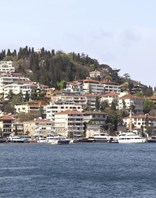
Istanbul
Istanbul positively exudes anticipation and excitement for property investors and its residential and commercial property markets are undergoing almost unprecedented growth.
Since 2005 foreigners have been completely free to purchase property in Turkey and the laws protecting title ownership have been tightened, allowing investor confidence to be rekindled after a period of some uncertainty.
Turkey's promise as a future EU member has encouraged an immediate surge of overseas investors, particularly within the commercial property market in Istanbul - Ikea opened a store in Istanbul in 2005 and was followed recently by Harvey Nichols. The headquarters of many other multinational companies and foreign banks are now operating from Turkey, and Istanbul is at last taking the commercial limelight - so much so that the retail space available is far below demand levels, thus creating a strong opportunity for all timely investors.
New industrial areas are emerging on both sides of the Bosphorus. The area encompassing Haramidere and Beylikdüzü is a well served district close to the city centre of Istanbul. Along with other emerging areas, it is set to attract a further supply of professionals seeking rental accommodation, in turn fuelling a healthy buy-to-let investment market. In addition to the major commercial harbour at Kumport, this particular area also hosts brand new commercial and recreation centres, providing all convenient, commercial and industrial amenities close at hand. Other up-and-coming areas are the Ümraniye and Airport districts, which hope to satisfy the high demand for office space within the boundaries of the city centre.
The residential property market in Istanbul is fuelled both by booming tourism and a healthy commercial climate. A definite tourist trap, boasting a vast number of attractions, Istanbul city has a great deal to offer as a tourist destination. Enterprising property investors are purchasing and renovating properties suitable for holiday lets in the most fashionable areas of the city.
Budget airlines such as Easyjet link Istanbul to the rest of Europe, bringing with them increased numbers of visitors. Daily flight connections link Istanbul and Heathrow via Turkish Airlines, with XL Airlines also running a weekly service to Gatwick. The Sabiha Gökcen Airport now offers improved transportation links and is used for both interna¬tional and domestic services. The development of the Formula 1 track in Tepeören, has also attracted attention to this region.
Increased demand in both the commercial and residential sectors are feeding rental yields and pushing up prices fast. Despite growth rates in the past five years sometimes topping as much as 85%, prices remain comparatively low and high capital growth rates of around 20% are forecasted for prime Istanbul locations during 2008. With growth continuing to be driven by huge demand through an increase in jobs and disposable income, investors continue to expect to see significant growth in such a key location. However, Colliers International forecast that current supply levels will not be able to meet demand levels; hence, rents will continue to rise in all areas.
Maceio
Maceio city glimmers in endless days of sunshine, alongside 200km of fine, silky white beaches in the popular northeast of Brazil. It is a vibrant, beautiful destination and many of today’s investors are astounded that it hasn’t been discovered as a strong investment location before now.
Maceio has been identified at the 71st largest growing city of the world. Apart from being the capital city of the Alagoas region, Maceio is also one of Brazil’s fastest growing cities, creating a potentially strong investment arena for overseas property buyers.
A modern, cosmopolitan city with a population of over one million, Maceio is now becoming a favoured pleasure and business tourism destination and the need for quality accommodation to cater for increased demand has never been greater. In June 2007, Abraão Moura, President of the Brazilian Travel Agents Association, confirmed that despite recent investments in Maceio, including the airport extension, a new convention centre and infrastructure improvements, tourism must continue to be the top priority in order to increase the appeal of property investment in Maceio. Already Maceio has seen a 75% increase in foreign tourism between 2002 and 2007, and it is currently listed as the seventh most popular tourist destination in Brazil, boding very well for early investors in this location.
A fast growing middle-class economy is now emerging in Maceio, while the Brazilian middle-class as a whole is growing fast and is currently set at 35 million. It is forecasted that the Brazilian middle-class will grow by 65% by year 2015, implying a ready market for desirable locations within this popular city.
Plans are underway to expand Maceio’s perimeters towards the north, integrating it with what have become known as some of the most stunning coastal locations in Brazil, adding to its overall appeal as an outstanding investment location. Beachfront property within the city of Maceio is naturally in very high demand, both with local and international tourists, particularly as they overlook the world’s second largest natural reef formation.
Today potential for successful lifestyle investment in Maceio is considered to be very strong and, as the city grows, Maceio property is likely to attract steadily growing rental and resale demand. Maceio is recognised as one of the safest cities in Brazil, making it a firm favourite with the domestic tourism market and residential markets as well as the international holiday rental market. With the domestic mortgage market set for massive growth of some 600% by 2014, and a strong indication of solid and ongoing economic growth within Brazil as a whole, property in cities such as Maceio offers exceptional re-sale and rental opportunity for early investors.
With its own new state of the art airport, Zumbi dos Palmares International Airport (MCZ), Maceio is well served with international connections to London, Rome, Cairo, Milan and Buenos Aires, as well as many cities throughout Brazil, offering easy access for foreign holidaymakers and investors.
Marrakech
The property market in Marrakech is strongly supported by the city’s outstanding success as a national tourist hotspot; today this magical city, with its famous UNESCO world heritage site at Djamaa El Fna Square, attracts more than four times the tourist arrivals than any other part of Morocco.
The real estate market is dictated by the tourist rental and second or holiday home markets. The latter seeks traditional Moroccan Riads located within the labyrinth of backstreets so characteristic of this bustling city. These can be bought for reasonable prices and converted into fabulous holiday homes or rental properties. The tourist market, on the other hand, generally demands apartment or villa style accommodation, offering strong potential for year-round rental returns. These often take the form of purpose-built resorts with a wealth of on-site facilities, all within minutes of the city centre. They often boast neighbouring golf courses, and are overshadowed by the stunning and mystic Atlas Mountains, ideal for skiing or trekking.
With no less than 27 completed five star hotels in Marrakech and 94% hotel occupancy levels, it is clear that demand for tourist accommodation is immense, creating lucrative buy-to-let opportunities in many prime tourist locations. The construction of more hotel groups, such as InterContinental Hotels and Resorts, due to open in 2011, is testament to the wealth of development still going on in the city. Indeed, King Mohammed’s VI’s Plan Azur is now in full swing and looks set to attract its target 10 million tourists per year to Morocco by 2010 - Marrakech alone is predicted to attract 3.5 million of this target.
Marrakech has fast growing international appeal and now competes alongside main-stay European destinations such as Prague, Barcelona and Rome. This is indeed a stunning city and, according to The Economist, investment in and around Marrakech last year reached a record USD 10.6 billion, three-quarters of which was poured into the tourism sector. The construction of a string of new hotels, spas, golf courses and holiday homes is projected to generate about 40,000jobs in the city over the next few years. Rental prospects have been dramatically boosted by the Moroccan government's recent policies and financial support which are making tourism a major national priority. These efforts are being rewarded with major increases in tourist figures.
Buyers in Marrakech benefit from the best infrastructure Morocco currently has to offer. Airlines such as Easyjet, Ryanair, Atlas Blue, Royal Air Maroc, British Airways and Thomson all offer direct flights to Marrakech from major UK airports and these services are encouraging further growth in the tourist market in and around the city. In the first quarter of 2007, airport arrivals at Marrakech’s expanding Menara International Airport increased by an astounding 39% compared with the previous year. The proposed London to Marrakech train service, incorporating a TGV train link from Tangier to Marrakech in only three hours as opposed to the current eleven hours, means Marrakech should soon be opening up to an even greater influx of European visitors.
IPIN has excellent investment opportunities in these areas. Please consult with an IPIN advisor for further information